What is car recovery, and how is it different from towing?
Car recovery is the complete process of safely moving a vehicle that cannot be
driven and delivering it to a garage, dealership, or home. Towing is one part of
that process — the actual pulling or carrying of the vehicle. In everyday Dubai use the two
words mean the same thing, but a proper recovery service does more than hook up a rope. It
includes roadside fixes, jump-starts, winching, careful loading of low or damaged cars, and
delivery to the exact place you choose. When you call Emirates Car Recovery on
+971 50 961 3777, you get that full service, not just a tow.
When do you actually need car recovery in Dubai?
You need recovery any time your car cannot safely finish its journey. Around Dubai, the
callouts we see most often are:
- A flat or dead battery — the single most common reason, especially in summer.
- A flat, punctured, or blown tyre with no usable spare on board.
- An engine that overheats, stalls, or will not start at all.
- A collision, from a light bumper knock to a vehicle that is undrivable.
- Keys locked inside the car, sometimes with the engine running or a child aboard.
- Running out of fuel on a long stretch like Sheikh Zayed Road or Emirates Road.
- A 4x4 or SUV bogged down in soft desert sand on a weekend trip.
- A car that needs moving out of a tower basement or after a mechanical failure.
If any of these happen, the safest move is to stop, get clear of traffic, and call for a
professional recovery rather than risk driving a vehicle that is not roadworthy.
The main types of recovery, explained simply
Knowing the options helps you describe what you need and get the right truck the first time:
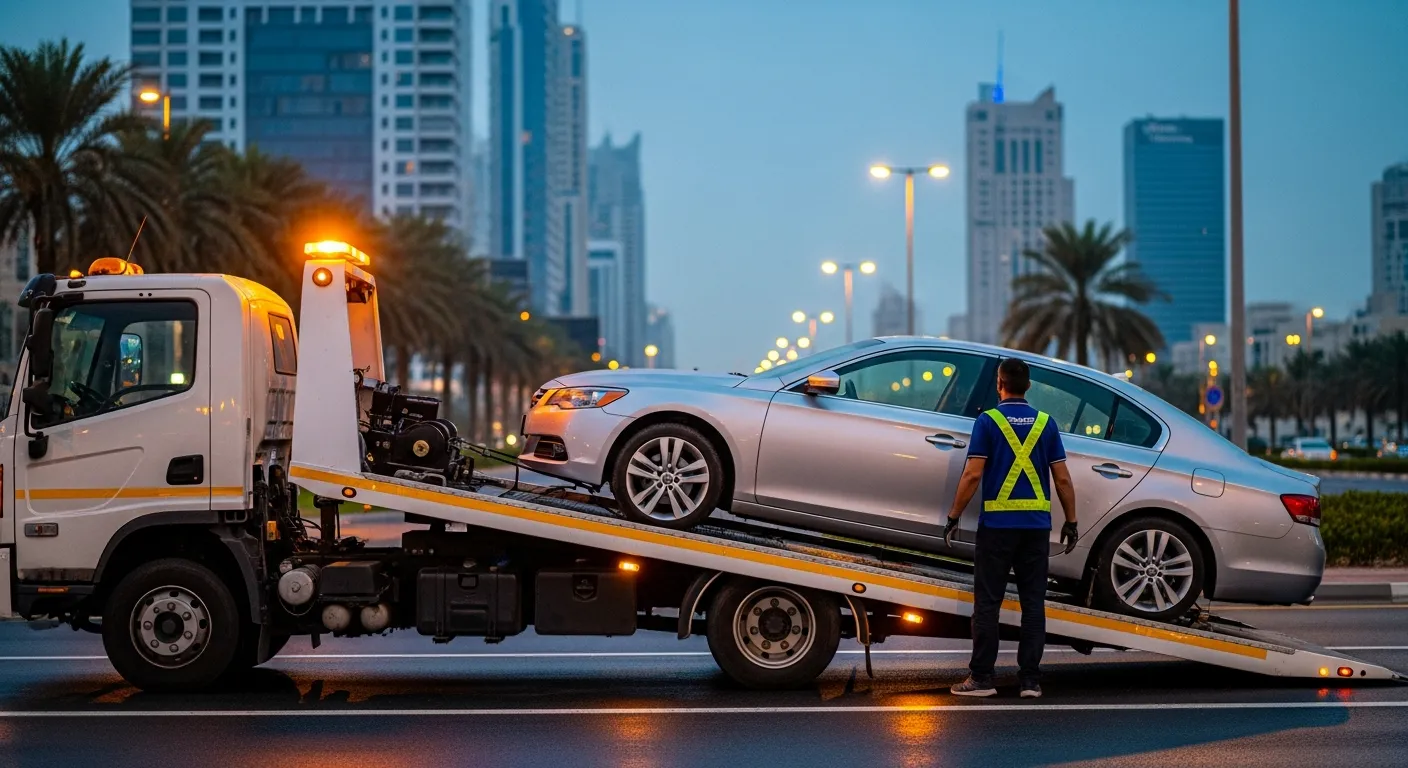
- Flatbed (tilt-tray) recovery. The whole car sits on a flat platform with
every wheel off the road. This is the safest method for electric and hybrid cars, low
sports cars, all-wheel-drive vehicles, and anything with accident or gearbox damage.
- Wheel-lift towing. Two wheels are lifted and the car is towed on the
other two. It is quick and efficient for short, straightforward moves of standard cars.
- Roadside assistance. On-the-spot help — a jump-start, a spare-tyre fit,
fuel delivery, or a lockout — so you can often drive away without a tow at all.
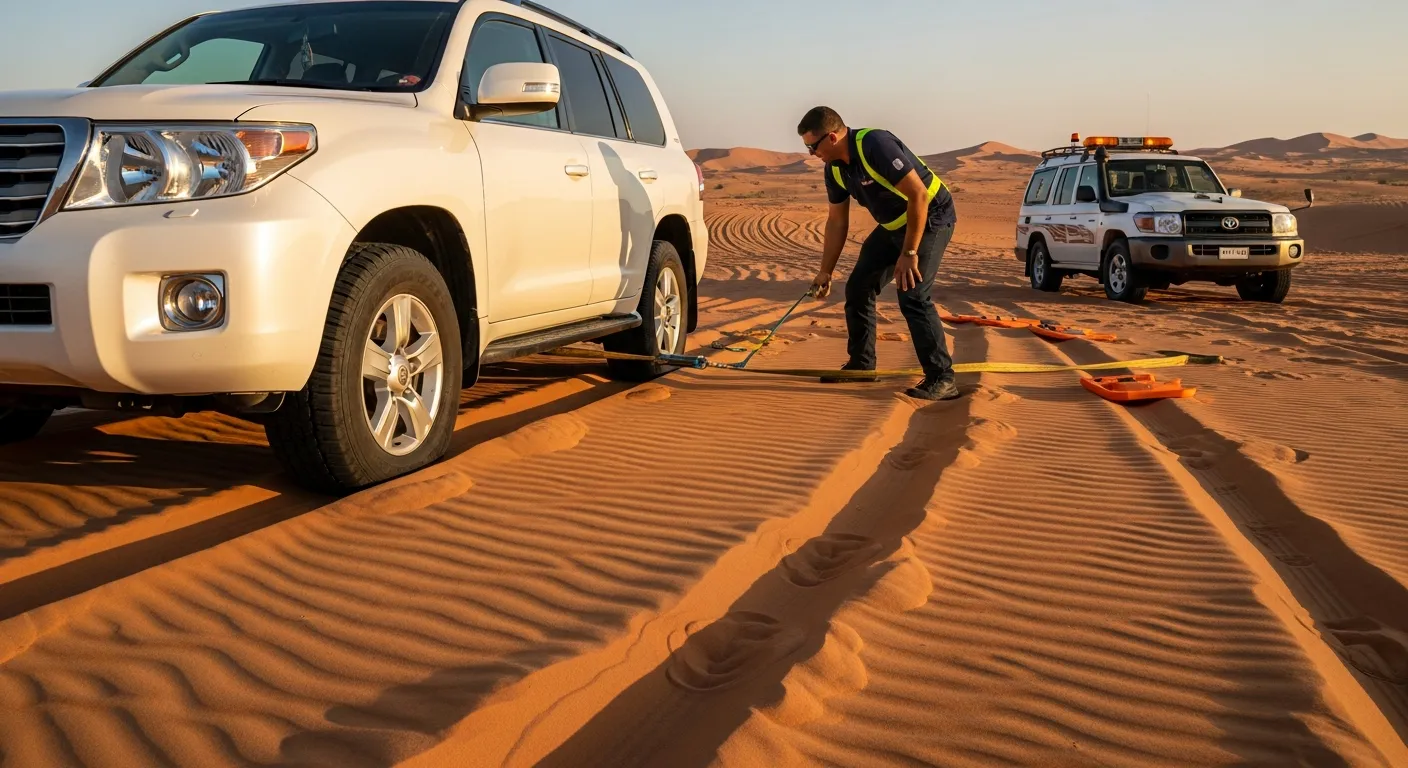
- Winching and off-road recovery. Pulling a vehicle out of sand, a ditch,
or an awkward position using a winch, traction boards, and proper recovery points.
- Specialised recovery. Motorcycles on cushioned beds, basement pull-outs
with compact gear, and careful handling of heavy or high-value vehicles.
How fast can a recovery truck reach you in Dubai?
In most parts of Dubai a recovery truck reaches you within about 30 minutes, and
often sooner. The reason is simple: trucks are positioned across the city day and
night rather than dispatched from a single depot, so the nearest one comes to you. Real
arrival time depends on your exact location, the time of day, and traffic. A breakdown in a
central area like Business Bay or Deira is usually reached faster than one deep in a newer
Dubailand community, but we cover all of it, 24 hours a day, every day of the year. When you
call, you get an honest time estimate, not a vague promise.
How much does car recovery cost in Dubai?
The price depends on three things: where you are, what you drive, and how far the
car is going. A short jump-start in a car park costs far less than a flatbed
recovery of a large SUV across the city. Rather than guess, we give you a clear, all-in
quote on the phone before any truck is sent, so you agree the price first. There are no
hidden fees, no inflated weekend surcharges, and no surprises when the driver arrives.
Payment is easy too — cash, credit and debit cards, Apple Pay, and Google Pay, plus monthly
invoicing for fleet and business accounts. Be cautious of anyone who refuses to quote
upfront or only names a price once your car is already loaded.
Why Dubai's summer heat causes the most breakdowns
Dubai summers are hard on cars, and battery failure is the result we see most. Extreme heat
speeds up the chemical wear inside a battery, so a unit that seemed fine in winter can fail
without warning in July. Heat also strains the cooling system, raising the risk of
overheating in slow traffic, and it pushes tyre pressures up, which makes blowouts more
likely on hot tarmac. A few simple habits help: have your battery tested before summer,
keep coolant topped up, check tyre pressures when the tyres are cold, and never leave a car
baking in direct sun longer than necessary. If something does fail, recovery is one call
away on +971 50 961 3777.
Desert and off-road recovery — getting unstuck from the sand
Weekend dune trips near Al Qudra and Lehbab end in soft sand more often than people expect.
The instinct to keep accelerating usually makes it worse, digging the wheels in deeper. The
better move is to stop, lower your tyre pressure if you can, and call for proper recovery.
Our desert crews use winches, traction boards, and the vehicle's real recovery points to
pull a stuck 4x4 free without bending chassis rails or straining the drivetrain, then guide
you safely back to firm ground. If you are stranded off-road, stay with your vehicle, keep
water handy, and share your live location so we can reach you quickly.
Recovering luxury, sports, and electric vehicles
High-value and low-clearance cars need extra care, and the wrong method can cause real
damage. Supercars and prestige saloons are loaded on long, low flatbed ramps with soft
straps and wheel nets, so there is no contact with splitters, sills, or paintwork. Electric
and hybrid vehicles should travel on a flatbed with all four wheels off the ground, because
towing them on their driven wheels can harm the motor or regen system. Whether it is a
Ferrari, a Tesla, or a family EV, the principle is the same: keep the wheels up, keep the
straps soft, and treat the car as if it were our own.
Tower basements and underground car parks
A car that dies in a tower basement is its own kind of problem. Standard recovery trucks
cannot fit down the tight ramps and under the low ceilings found across Dubai Marina,
Business Bay, JLT, and Downtown. We use compact equipment and skates that move a stalled or
damaged vehicle out of the deepest parking levels safely, without scraping the car or the
structure. If your vehicle is stuck below ground, note the building name and parking level
when you call so we bring the right gear straight away.
What to do right now if you need recovery
If your car has stopped moving and you are in a safe spot, follow these four steps.
One: switch on your hazard lights immediately. Two: place
the warning triangle from your boot about 30 metres behind the car on the traffic side.
Three: step out on the kerb side, never the traffic side.
Four: WhatsApp +971 50 961 3777 with your live location
pin, the make and model of your vehicle, and one line describing what is wrong. Within about
a minute you will have a quote, and in most Dubai zones a recovery truck will be with you
within 30 minutes. Until it arrives, stay back from the vehicle and well out of traffic.
Accident recovery and working with insurance
After a collision, safety and order come first. Move clear of traffic if you can, switch on
hazards, and check everyone is unhurt. In Dubai, certain accidents require a police report
before a damaged car is moved, and we work calmly alongside that process. Our crews load
even badly damaged vehicles onto the flatbed and deliver them to the garage your insurer
approves, so your claim stays straightforward. If you are unsure whether your situation needs
a police report, call us and we will talk you through it before we dispatch.
Booking, paying, and following up
For most customers the journey is simple: WhatsApp us, get a quote, confirm, the truck
arrives, your vehicle is moved, you pay, and you receive an invoice. We accept cash, credit
and debit cards, Apple Pay, Google Pay, and bank transfer, plus monthly invoicing for retail
jobs and B2B accounts. After the recovery is complete you get a written WhatsApp invoice with
photos of the loading and unloading, so there is a clear record. The next day a quick message
confirms the vehicle reached its workshop or destination in good condition. If anything is
unclear, you reply on the same thread and a senior dispatcher sorts it within 24 hours. Repeat
customers get priority on the next call, because the system remembers their vehicle, preferred
workshop, and payment method.
Roadside assistance or full recovery — which do you need?
A lot of breakdowns are fixed at the roadside, with no tow at all. If the problem is a flat
battery, a single flat tyre with a usable spare, an empty fuel tank, or keys locked inside,
roadside assistance usually gets you driving again in minutes and costs less than a full
recovery. A tow becomes the right call when the car genuinely cannot be driven safely — an
engine that will not run, a gearbox fault, a serious tyre problem with no spare, accident
damage, or any warning that points to deeper trouble. When you call, describe the symptoms
honestly and we will tell you which option fits, so you only pay for what you actually need.
What information to have ready when you call
The more we know upfront, the faster the right truck reaches you. Have these ready:
- Your live location — a WhatsApp location pin is fastest and most accurate.
- The make, model, and colour of your vehicle, plus whether it is automatic or electric.
- A one-line description of what is wrong, so we send the correct equipment.
- Whether the car is in a basement, on a highway, or off-road, and how many wheels turn.
- Where you want the vehicle taken — your garage, dealership, or home address.
With those details, we can give an accurate quote and arrival time on the first call rather
than working it out after the truck sets off.
Recovering motorcycles, vans, and heavier vehicles
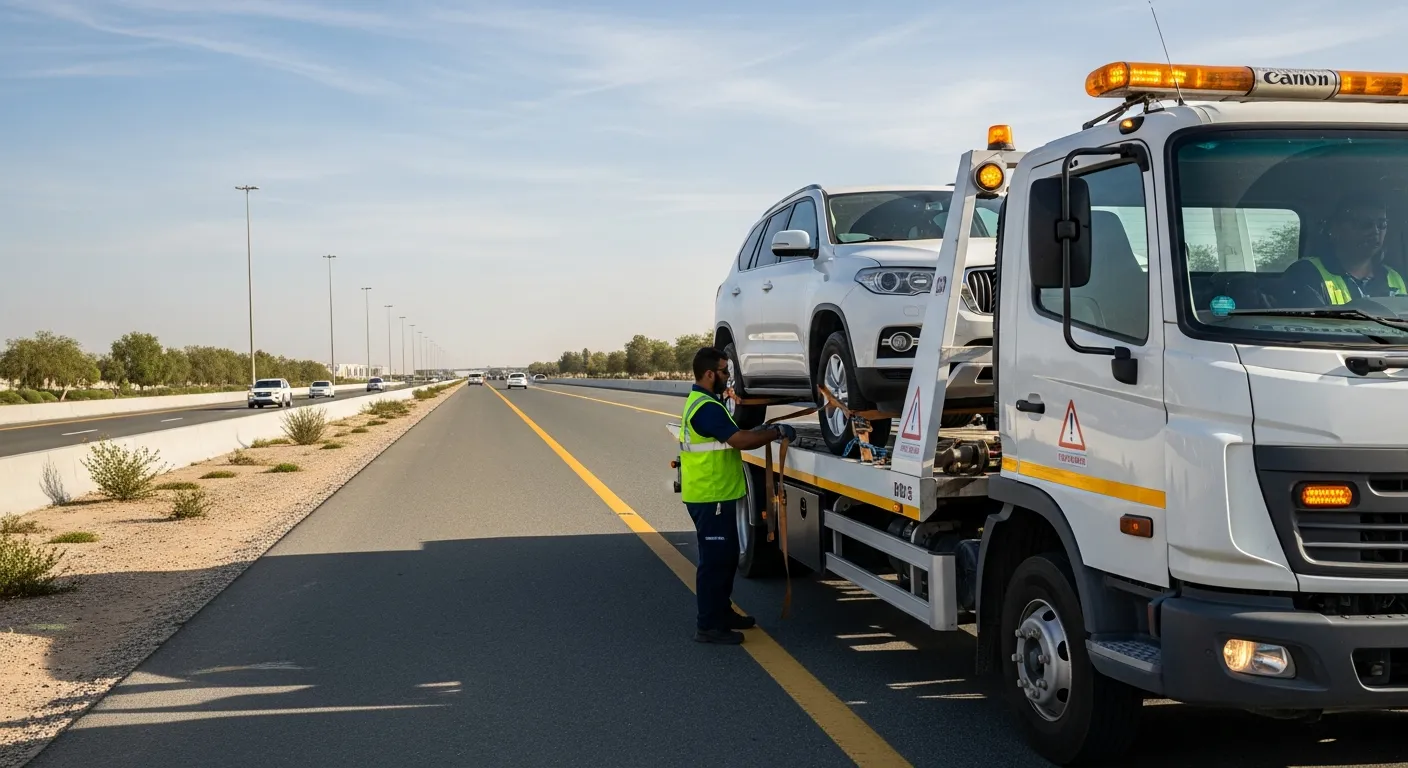
Recovery is not only for cars. Motorcycles travel upright on cushioned beds with soft straps
and wheel chocks, so sports bikes, tourers, and delivery scooters reach the workshop without
a scratch. Vans, pickups, and light commercial vehicles ride securely on our hydraulic
flatbeds, which matters for businesses that cannot afford long downtime. Even larger or
oddly positioned vehicles can usually be recovered with the right rig and approach. If you
run a fleet or a food truck, ask about priority dispatch and monthly invoicing so a
breakdown never stalls your operation for long.
How to choose a reliable recovery company in Dubai
Not all recovery services are equal, and a few checks tell you who to trust:
- Licensed, bonded, and insured. Your vehicle should be protected from load to delivery.
- Transparent pricing. A clear quote before dispatch, with no hidden or last-minute charges.
- A real answer, 24/7. A person who picks up at 3am and a truck that actually comes.
- The right equipment. Flatbeds for EVs and low cars, compact gear for basements, winches for sand.
- Strong reviews and local knowledge. Crews who know Dubai's roads, towers, and desert edges.
Emirates Car Recovery is built around all five, with a 4.8-star rating from
2549 reviews and full coverage across Dubai.
One last thing — save the number
Most of our calls come from people who saved our number long before they needed it. Roadside
emergencies happen at the worst times — a Friday midnight, an Eid weekend, an empty stretch
of road with no one around — and the difference between waiting an hour and waiting fifteen
minutes is having a single saved contact. Save +971 50 961 3777
in your phone as “Recovery Dubai”, or tap WhatsApp to start a thread you can
come back to. The next time you, a family member, or a friend needs help on a Dubai road, the
contact is already there.
↕ Scroll inside the panel to read the full article.